quarta-feira, 1 de julho de 2026
O Supremo e a falta de limites, por Marcelo Godoy
O Estado de S. Paulo
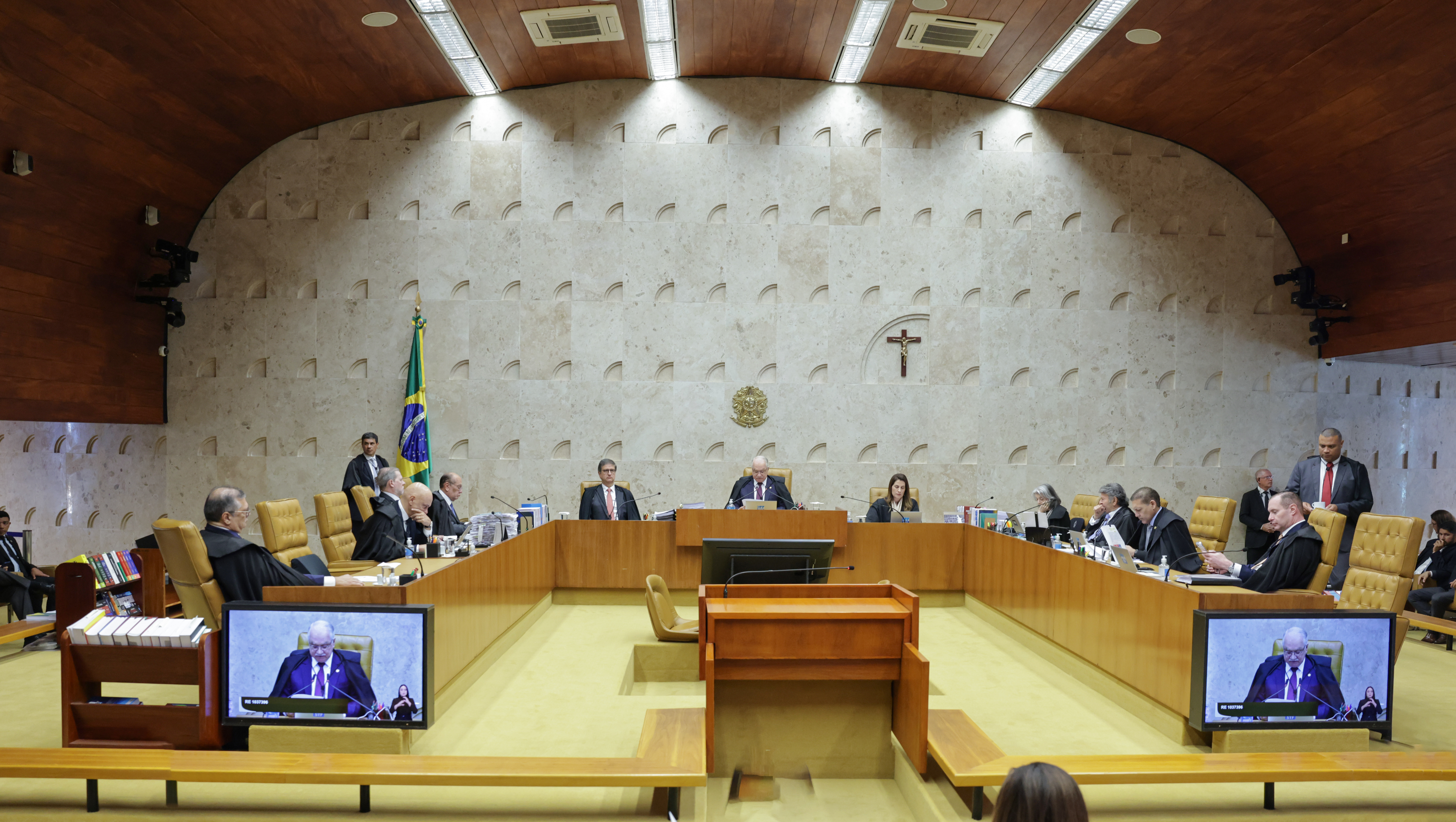
Nunes Marques disse que a magistratura passa dificuldades e quis fim dos limites dos penduricalhos
Em meio ao julgamento que afrouxou as regras dos penduricalhos a magistrados e procuradores, quatro ministros do Supremo Tribunal Federal queriam, ao contrário de outros seis colegas, que não houvesse limites para o pagamento das verbas indenizatórias reconhecidas e validadas pelos conselhos da Justiça e do Ministério Público.
Quem abriu essa divergência foi Luiz Fux, que se disse contrário ao estabelecimento do limite de 35% além do teto para as verbas adicionais ao salário. Além disso, os ministros autorizaram o pagamento de uma gratificação de 5% a cada cinco anos de serviço. Essa regra, somada aos penduricalhos, garante a quem está no topo da carreira um salário de R$ 78 mil. Mas Fux queria mais. Assim como os ministros André Mendonça, Dias Toffoli e Nunes Marques. Este último defendeu até o pagamento de auxílio-creche aos doutores.
Trata-se de um velho dilema da República: os limites entre a proteção dos indivíduos e o bem-estar comum. Tito Lívio conta no livro III de seu Ab Urbe Condita Libri a reação do prefeito Quinto Fábio aos tribunos da plebe quando propuseram a Lei Terentília: “Vosso poder tem por objetivo a proteção dos indivíduos, não a ruína da comunidade”. O conflito entre patrícios e plebeus em Roma antecedeu a publicação da Lei das Doze Tábuas, base do direito romano. Os limites que a lei trazia a todos e a garantia a um julgamento justo significavam limitar o arbítrio de uns contra os outros.
Os ministros parecem ciosos na defesa dos ganhos e direitos de alguns indivíduos. À direita, nossas forças políticas dizem que alguns deles se comportam como se a sociedade lhes devesse a liberdade e, por isso, se veem livres para legislar, prender e soltar. À esquerda, os tribunos da plebe dizem que os ministros são rígidos quando se trata de julgar a pejotização ou a revisão da vida inteira e negam à população desvalida centenas de reais, enquanto preservam seus penduricalhos milionários. Lembram que alguém que recebe R$ 78 mil mensais é capaz de pagar uma babá para seus filhos, sem precisar de auxílio.
Afinal, onde o equilíbrio entre a legalidade e a equidade? Como enxergar justiça se não for possível vislumbrar a pietas, a gravitas ea dignitas? Vinte dias antes de seu voto, Nunes Marques disse que a magistratura vivia um “momento difícil” em razão da forma “como se comunicam os periódicos brasileiros em relação às dificuldades financeiras, às vezes não muito reconhecidas pela sociedade”. De fato, é difícil entender a insensibilidade de domésticas, pedreiros, trabalhadores de aplicativos e outros que insistem em ver nos tais penduricalhos um privilégio dos doutores. A culpa, logicamente, é da imprensa.

O texto critica a decisão do Supremo Tribunal Federal que flexibilizou limites remuneratórios da magistratura, permitindo a ampliação de ganhos por meio de “penduricalhos” e adicionais. Embora tenha sido fixado um teto de 35% acima do limite constitucional, alguns ministros defenderam a ausência total de limites, evidenciando divisão interna na Corte.
Godoy enquadra o episódio como parte de um dilema clássico entre proteção de direitos individuais e interesse coletivo, sugerindo que o STF tem priorizado benefícios corporativos em detrimento da percepção de justiça social. O autor destaca a contradição entre decisões restritivas em temas que afetam a população mais vulnerável e a permissividade em relação a vantagens da própria magistratura.
O artigo também critica a desconexão entre a realidade social brasileira e a justificativa de dificuldades financeiras apresentada por membros do Judiciário, apontando que tais decisões reforçam a percepção de privilégio e comprometem a legitimidade institucional.
Em síntese, o autor sustenta que o STF, ao ampliar benefícios internos, ultrapassa limites razoáveis entre legalidade e equidade, alimentando críticas de corporativismo e afastamento da sociedade.

📲 #RecordNews #Notícias
➡️ Leia mais em: r7.com
📷 Reprodução: Antonio Augusto/STF
Entre Garantias e Privilégios: Duas Cortes Supremas e os Limites do Poder Constitucional
Decisões recentes da Suprema Corte dos Estados Unidos e do Supremo Tribunal Federal brasileiro expõem diferenças estruturais na interpretação constitucional e no papel do Judiciário diante de direitos, economia e legitimidade institucional.
Por Redação
Na mesma semana em que a Suprema Corte dos Estados Unidos reafirmou a cidadania por nascimento como garantia constitucional inafastável, o Supremo Tribunal Federal brasileiro avançou em decisão que flexibiliza limites remuneratórios da magistratura. Embora situadas em contextos jurídicos distintos, as duas decisões oferecem um contraste revelador sobre o papel das cortes supremas em democracias contemporâneas.
Nos Estados Unidos, a Corte rejeitou iniciativas associadas ao ex-presidente Donald Trump que buscavam restringir a cidadania por nascimento, preservando a interpretação tradicional da 14ª Emenda. A decisão, ainda que marcada por uma divisão interna de 6 a 3, foi interpretada por analistas como uma reafirmação de um dos pilares do constitucionalismo norte-americano: a proteção de direitos fundamentais contra iniciativas políticas de caráter restritivo. Ao evitar mudanças abruptas em um princípio consolidado, o tribunal também afastou potenciais impactos econômicos e institucionais decorrentes de uma redefinição do status jurídico de milhões de pessoas.
A decisão revela uma dinâmica recorrente da Suprema Corte dos EUA: mesmo em composições ideologicamente inclinadas, a preservação de garantias estruturais tende a prevalecer sobre teses jurídicas consideradas marginais ou disruptivas. O ativismo judicial, nesse contexto, opera como mecanismo de contenção, limitando avanços do poder político sobre direitos consolidados.
No Brasil, o cenário apresenta outra configuração. O Supremo Tribunal Federal, ao analisar a remuneração de magistrados e membros do Ministério Público, decidiu validar mecanismos que ampliam ganhos por meio de verbas indenizatórias e adicionais por tempo de serviço. Embora tenha estabelecido um limite de acréscimo de 35% acima do teto constitucional, parte dos ministros defendeu a inexistência de qualquer limitação, evidenciando divergência interna quanto ao alcance dessas verbas.
A decisão ocorre em meio a críticas recorrentes sobre os chamados “penduricalhos”, frequentemente apontados como fator de distorção do teto remuneratório no serviço público. Ao mesmo tempo, o debate expõe tensões entre autonomia institucional, legalidade administrativa e percepção pública de equidade.
Diferentemente do caso norte-americano, em que a Corte atuou para preservar uma garantia constitucional de caráter universal, o julgamento brasileiro envolve a interpretação de normas que impactam diretamente a estrutura remuneratória de uma categoria específica. Isso não implica, por si só, desvio institucional, mas levanta questionamentos sobre os critérios de equilíbrio entre direitos individuais, prerrogativas funcionais e interesse público.
A comparação entre os dois casos evidencia não apenas diferenças de conteúdo, mas de função constitucional. Nos Estados Unidos, a Corte reafirma um limite ao poder político em nome de direitos fundamentais. No Brasil, o Supremo exerce papel ativo na definição de parâmetros administrativos e institucionais, frequentemente ocupando espaços deixados por lacunas normativas ou disputas corporativas.
Em ambos os contextos, contudo, emerge uma questão comum: a legitimidade das decisões judiciais em sociedades democráticas depende não apenas de sua fundamentação jurídica, mas também de sua capacidade de dialogar com expectativas sociais de justiça, estabilidade e igualdade.
Se, de um lado, a proteção da cidadania por nascimento reafirma a centralidade de garantias constitucionais, de outro, a flexibilização de limites remuneratórios reacende o debate sobre a extensão dos direitos institucionais e seus efeitos sobre a percepção pública do Judiciário.
Entre garantias e prerrogativas, o desafio permanece o mesmo: delimitar o exercício do poder judicial de modo a preservar, simultaneamente, a integridade da Constituição e a confiança da sociedade.

President Trump tried to ban birthright citizenship for the children of undocumented immigrants and some temporary foreign visitors.
Published June 30, 2026
Updated July 1, 2026, 10:03 a.m. ET
Share full article
ImageSenator Alex Padilla holds a microphone while standing behind a sign that reads “We are here. We belong. We are fighting back.”
Senator Alex Padilla, Democrat of California, spoke Tuesday outside the Supreme Court after the birthright citizenship decision.Credit...Allison Robbert for The New York Times
See more of our coverage in your search results.
Add The New York Times on Google
Latest
Pinned
Abbie VanSickle
Abbie VanSickleSupreme Court reporter
Here’s the latest.
The Supreme Court rejected President Trump’s attempt to end birthright citizenship, and the justices reaffirmed the long-held principle that nearly all children who are born on U.S. soil are American citizens.
Mr. Trump’s executive order had aimed to prevent babies born to undocumented immigrants and temporary foreign residents from automatically becoming Americans. Chief Justice John G. Roberts Jr., writing for the majority, explained that Mr. Trump’s executive order violated the 14th Amendment of the Constitution.
“Citizenship, then and now, was the right to have rights — to freely participate in our political community,” Chief Justice Roberts wrote. “The framers of the 14th Amendment extended that promise to ‘every free-born person in this land.’”
He added: “We keep that promise today.”
The 6-3 decision capped a more than decade-long effort by Mr. Trump to use the issue as a political tool. In a social media post, the president called the Supreme Court’s decision “too bad for our Country.” He urged Congress to take up the issue with legislation and wrongly asserted that “no long and unwieldy Constitutional Amendment is necessary.”
With their decision, five justices — a majority — found that birthright citizenship was guaranteed in the Constitution.
Here’s what else to know:
Read the decision: In a sign of the importance of the birthright decision, the court’s decision and dissents tallied nearly 200 pages.
The majority: The chief justice was joined in upholding birthright citizenship by the court’s three liberal justices, along with two fellow conservatives, Justices Amy Coney Barrett and Brett M. Kavanaugh. (Justice Kavanaugh wrote that he would strike down the executive order based on federal law, not the Constitution.)
Dissents: Three of the court’s conservatives — Justices Clarence Thomas, Neil M. Gorsuch and Samuel A. Alito Jr. — dissented, and Justice Alito called it a “serious mistake.”
Other cases: In its other final rulings of the term, the Supreme Court allowed states to bar transgender female athletes from girls’ and women’s sports teams, and the justices lifted limits on how much political parties can spend in coordination with candidates, a win for the G.O.P. In its next term, the justices will consider whether state and local laws that ban semiautomatic rifles like the AR-15 are unconstitutional.
Show more
Miriam Jordan
June 30, 2026, 3:20 p.m. ETJune 30, 2026
Miriam JordanCovering immigration
While unconditional birthright citizenship is the standard across the Americas, including in Canada, Mexico and nearly all Latin America and the Caribbean, it is rare in the rest of the world. Only about 30 of the world’s nearly 200 countries automatically grant citizenship to anyone born within their borders.
Most countries in Europe, Asia, the Middle East and Africa use the jus sanguinis principle, meaning that citizenship passes from parent to child; it is not determined by where the baby is born. A child born in Japan to non-Japanese parents is not Japanese. Some countries have conditional birthright citizenship. For example, children born in France to foreign parents can become citizens at age 18 if they have lived in the country for at least five years. A child born in Portugal receives citizenship if a parent has been a legal resident for at least a year.
Emily Davies
June 30, 2026, 3:13 p.m. ETJune 30, 2026
Emily DaviesPolitical reporter
Amy Coney Barrett faces right-wing ire over recent rulings.
Image
A close-up of Justice Amy Coney Barrett.
Supreme Court Justice Amy Coney Barrett has become a target of the right for voting with liberal justices on several cases this year.Credit...Elizabeth Frantz/Reuters
Supreme Court Justice Amy Coney Barrett faced a torrent of attacks from right-wing commentators after she voted this week to reject two key pillars of the Trump administration’s agenda, including the effort to end birthright citizenship.
Justice Barrett sided Monday with Chief Justice John G. Roberts Jr. and the court’s liberal minority to reject a push to restrict mail-in voting practices, which he has long blamed, without evidence, as central to his defeat in 2020.
Prominent G.O.P. officials and pundits cast Justice Barrett’s votes as part of a pattern of betrayal of Mr. Trump and the Republican Party. Last year, she was the Republican-appointed justice most likely to be in the majority in decisions that reach a liberal outcome, according to an analysis of her record prepared last year for The New York Times, although that was not true in the current term. She previously cast a deciding vote to block Mr. Trump’s tariffs.
“It turns out that Amy Coney Barrett is a DEI hire, little better than Ketanji Jackson,” Matt Walsh, a right-wing commentator, wrote on Tuesday on social media, referring to Supreme Court Justice Ketanji Brown Jackson, the court’s only Black liberal. “Terrible pick. When’s the last time we had a Republican president who didn’t put a liberal justice on the court?”
Representative Nancy Mace of South Carolina, a far-right firebrand, called for Justice Barrett to “be removed from the Bench.”
A Supreme Court justice can be removed through the congressional impeachment process outlined in the Constitution, requiring a simple majority vote in the House and a two-thirds majority vote in the Senate. Republicans do not have the votes to convict in the Senate.
Justice Barrett, whom Mr. Trump nominated to replace Ruth Bader Ginsburg, the liberal justice who died in 2020, has been instrumental in shifting the court to the right. She joined the conservative majority in overturning Roe v. Wade and striking down affirmative action in college admissions, two of the most consequential rulings the court has issued in recent years.
Her vote to uphold birthright citizenship in a decision issued on Tuesday intensified the backlash that had already been building after she had voted one day earlier to uphold a Mississippi state law allowing mailed ballots postmarked by Election Day to arrive as much as five days later.
“A shockingly wrong opinion,” Senator Eric Schmitt of Missouri wrote on social media on Monday.
”Remember Election Day? This disastrous SCOTUS decision, authored by Justice Barrett, guarantees we’ll keep drifting away from it — as our sacred elections get bogged down by endless mail-in ballots and never-ending counts,” Representative Abe Hamadeh of Arizona wrote on X.
Right-wing commentators, including the former Fox News host Megyn Kelly, similarly railed against the conservative justice.
“Amy Coney Barrett is a turncoat,” Ms. Kelly said on her Sirius XM show. “She’s constantly siding with the left.”
While most of the commentary from the right was sharply critical of Justice Barrett, other conservative commentators praised her for what they saw as a principled approach to a job that should rise above the political fray.
“She is a conservative jurist, but she is very independently minded,” the Fox News legal analyst Jonathan Turley said on air on Tuesday. “And I know that’s hard for people to accept.”
Show more
Read the Supreme Court Ruling That Upholds Birthright Citizenship
The justices blocked President Trump’s executive order that banned birthright citizenship for the children of undocumented immigrants and some temporary foreign visitors.
Advertisement
SKIP ADVERTISEMENT
Jazmine Ulloa
June 30, 2026, 3:12 p.m. ETJune 30, 2026
Jazmine UlloaCovering immigration
How seriously should civil rights groups take President Trump’s claim that he will use Congress to restrict birthright citizenship? “Not seriously at all,” said Taryn Wilgus Null, senior counsel with the Democracy Defenders Fund, one of the groups that argued to overturn Trump’s executive order. Although Null and other civil rights lawyers lamented that the justices were narrowly divided on certain underlying issues, they emphasized that the core ruling firmly protected the 14th Amendment, and they considered the matter legally settled.
Erica L. Green
Michael Gold
June 30, 2026, 3:01 p.m. ETJune 30, 2026
Erica L. Green and Michael GoldReporting from Washington
Trump urged Congress to take up birthright citizenship. Here’s why that’s unlikely.
Image
If President Trump were to pressure Congress to take up birthright legislation, it would be an exceedingly difficult vote ahead of the midterm elections.Credit...Tierney L. Cross for The New York Times
President Trump on Tuesday brushed off a Supreme Court rebuke on the issue of birthright citizenship as “too bad for our country,” after a turbulent term in which he tried to bully and intimidate the justices to carry out key parts of his agenda.
In its last opinion issued for the term, the court struck down Mr. Trump’s attempt to prevent babies born on U.S. soil to undocumented immigrants and temporary residents from being given citizenship automatically.
Mr. Trump has railed against birthright citizenship for years, using questions about what it means to be an American to fuel his political rise. He even attended oral arguments in the case, a presidential first, and warned at one point on social media that a loss would “cost America its DIGNITY!”
But on Tuesday, Mr. Trump said the loss was merely “too bad” and punted the issue to Congress, which he wrongly implied could reverse the decision through legislation.
He then pivoted to “other good victories” to celebrate after a term in which the court delivered some enduring conservative wins. Mr. Trump cited the justices’ ruling on Monday that he could fire officials on independent regulatory boards, which overturned 90 years of precedent and vastly expanded his power.
He called the case, which found that he could oust Rebecca Kelly Slaughter, a Democratic member of the Federal Trade Commission because she didn’t align with his agenda, “the biggest and most consequential Decision issued by the Court, by far.”
“This Decision gives tremendous additional Power back to the Presidency, where it belongs,” Mr. Trump wrote on social media. “It is an Honor to be the sitting President who, after all these years, WON this very important, and hard fought, Case.”
“We had other good Victories, too, and we also had the Birthright Citizenship loss, which we will work to correct in Congress, but the big SLAUGHTER, was SLAUGHTER,” he added.
Despite Mr. Trump’s assertion on the birthright case, legislation is not the quick fix he described. Five justices found that birthright citizenship was guaranteed in the Constitution. A sixth, Brett M. Kavanaugh, said he would strike down the executive order based on federal law, not the Constitution.
That means that the president would likely need a constitutional amendment to reverse the decision. The White House did not immediately comment on why the president believed he could achieve his goal without one.
Any measure, whether proposed as a bill or a constitutional amendment, would face long odds. And a demand by Mr. Trump that Congress attempt to pass one could be a political disaster for Republicans, who are not united on the issue.
Mr. Trump did face some other important losses this term. Most notably, the court ruled against his use of sweeping tariffs, which prompted him to personally attack the conservative justices he had appointed and voice his displeasure that they were not loyal enough to him.
Jeffrey L. Fisher, a law professor at Stanford University, said that Mr. Trump’s open hostility to the court in the most recent term was unique in presidential history.
“This was a momentous term in terms of the clash between the executive and judicial branches,” Mr. Fisher said. “Rarely in our history have we had such direct and dramatic clashes between those two branches.”
“When you have a president who is willing, as Trump is, especially in a second term, to push boundaries quite dramatically, even to the point of basically forcing the Supreme Court to have to consider overturning precedent,” he added, “then you get all the more serious clashes and high-stakes showdowns.”
The court handed Mr. Trump some wins on the ideological issues and policy promises that helped him secure a second term. It ruled in favor of Mr. Trump’s hard-line immigration policies of blocking asylum seekers at the border, and of ending deportation protections for hundreds of thousands of Haitian and Syrian migrants. The court also found that a new congressional district map in Louisiana that sought to establish a majority-Black district was unconstitutional, in what was seen as a blow to the Voting Rights Act and a major win for Mr. Trump and conservatives.
Also on Tuesday, the court ruled that states could ban transgender athletes from competing in women’s sports, an issue that was a focal point of Mr. Trump’s campaign and that he still regularly invokes in rallies and speeches. The White House boosted the decision in a news release, and Mr. Trump praised the court for taking “that ridiculous situation off the table.”
Mr. Trump said that “the Republican Party was treated very fairly by the United States Supreme Court,” and refrained from attacking the court or specific justices as he repeatedly had earlier this year.
Abigail Jackson, a White House spokeswoman, said in a statement that Mr. Trump had “racked up significant wins at the Supreme Court this term” and “will never waver when it comes to fighting for the agenda the American people elected him to enact.”
Abbie VanSickle and Zolan Kanno-Youngs contributed reporting.
Show more
Jazmine Ulloa
June 30, 2026, 2:54 p.m. ETJune 30, 2026
Jazmine UlloaCovering immigration
Gov. Greg Abbott of Texas slammed Tuesday’s Supreme Court decision on birthright citizenship, calling the policy “a powerful magnet for illegal immigration that will forever change our nation if left unaddressed.” Abbott, whose own border policies have frequently served as a blueprint for the Trump administration, is part of a chorus of Republican leaders criticizing the 6-3 ruling.
Image
Credit...Antranik Tavitian for The New York Times
Advertisement
SKIP ADVERTISEMENT
Erica L. Green
June 30, 2026, 2:39 p.m. ETJune 30, 2026
Erica L. GreenWhite House reporter
After attempting to downplay his loss in the Supreme Court’s birthright ruling, President Trump on social media congratulated President Xi Jinping of China on the country’s “massive Birthright Citizenship WIN!”, an apparent reference to an argument he made in recent months that birthright citizenship had been abused by “Chinese billionaires” who were taking advantage of a right that was created for the “babies of slaves.”
Miriam Jordan
June 30, 2026, 2:23 p.m. ETJune 30, 2026
Miriam JordanCovering immigration
Some immigrants who had been anxiously awaiting the decision said the ruling gave them a renewed sense of optimism about building their lives and raising families in the U.S.
“As an immigrant, I am overjoyed that the Supreme Court upheld birthright citizenship today,” said Maria Brossi Andreote, a Brazilian microbiologist who came to the United States on a temporary work visa with her husband in 2019.
They have since had a daughter, and the couple and their Brazilian-born older child, a boy, have received their green cards.
“It’s a reminder that we also belong here,” said Ms. Andreote, a researcher at Penn State University.
Jazmine Ulloa
June 30, 2026, 2:09 p.m. ETJune 30, 2026
Jazmine UlloaCovering immigration
In a virtual news conference, groups representing the babies who would have been subjected to President Trump’s executive order stressed the ruling reaffirmed the nation’s commitment to equal citizenship and national belonging. Cody Wofsy, the deputy director of the A.C.L.U. Immigrants’ Rights Project, quoted from mothers in the case. One woman said this Fourth of July would “feel even more special,” he added.
Michael Gold
June 30, 2026, 1:46 p.m. ETJune 30, 2026
Michael GoldCovering Congress
In the hours since the Supreme Court’s ruling, some Senate Republicans have already urged Congress to pass legislation or a constitutional amendment to end birthright citizenship. But voting on such a measure, even just to placate President Trump, would carry severe political risks for Republican lawmakers, who are already worried about losing their narrow majority in both the House and Senate.
Polls show that most Americans support the right to birthright citizenship, including about 40 percent of Republicans. Such a vote could also risk the inroads that Republicans have made with Hispanic voters, as Latino Republicans have historically been more supportive of birthright citizenship.
With just over four months until November’s midterm elections, many Republicans will be loath to take a vote that might anger broad swaths of the electorate that could be crucial to the control of Congress.
Advertisement
SKIP ADVERTISEMENT
Jazmine Ulloa
June 30, 2026, 1:36 p.m. ETJune 30, 2026
Jazmine UlloaCovering immigration
What to know about the Supreme Court’s birthright citizenship order.
Image
The empty Supreme Court chamber.
The Supreme Court ruled against the president 6 to 3. Credit...Amir Hamja/The New York Times
The Supreme Court on Tuesday struck down the Trump administration’s executive order limiting the right to automatic citizenship for babies born in the United States.
Civil rights leaders and immigrant rights organizations lauded the 6-to-3 decision, saying it affirmed more than a century of legal precedent and the nation’s long-held values. But they warned the fear instilled by the Trump administration’s targeting of immigrants would linger.
Immigration hard-liners denounced the Supreme Court ruling, arguing the Trump administration’s aggressive enforcement against those in the country unlawfully was more justified and urgent than before.
Kevin Roberts, president of the Heritage Foundation, a conservative think tank, described it as “a tremendous betrayal of the republic” that lessened the value of American citizenship. He also previewed what could be the next move for Republican opponents: He called for a constitutional amendment to correct it.
Here’s what to know.
How did we get here?
Birthright citizenship, which is rooted in common law, has been guaranteed by the 14th Amendment to the Constitution for more than 150 years.
President Trump has long promised to restrict the right, blasting it as a “scam” that attracts migrants. On the first day of his second term, Mr. Trump signed an executive order that aimed to end birthright citizenship for the U.S.-born babies of unauthorized immigrants and foreign residents with temporary legal status. These included tourists and students on visas.
Immigrant and civil rights organizations and more than 20 states, as well as the District of Columbia, challenged the order in at least four major lawsuits. Those led to lower court orders that blocked the restrictions from taking effect nationwide.
The case before the Supreme Court is rooted in a class-action lawsuit named Barbara v. Trump. It was filed in New Hampshire to protect the rights of all children born in the United States.
What is the immediate impact?
The executive order is now null and void. States can continue issuing birth certificates as they have been.
Parents will see no changes or extra legal hurdles when applying for birth certificates, passports or Social Security numbers. A U.S. birth certificate will continue to be proof of citizenship for any child.
According to the Pew Research Center, there are more than six million people born in the United States who live with at least one unauthorized immigrant parent. That number includes about 4.6 million children under 18 and about 1.4 million U.S.-born adults.
Deborah Fleischaker, a former Homeland Security official now with the Latino group UnidosUS, called the decision “a huge relief.” Policy experts had warned that the order risked creating a permanent underclass of stateless children, barred from citizenship in the United States and potentially rejected by their parents’ home countries.
What is the political fallout?
Most Americans support automatic citizenship for those born on U.S. soil, according to a New York Times analysis of polling. That includes a vast majority of Democrats and about 40 percent of Republicans.
The ruling quashes one of the most expansive parts of the Trump administration’s immigration agenda, and could prompt calls from Republican lawmakers for a constitutional amendment to restrict the right. That would be a legislative fight with significant hurdles.
In Washington, the House speaker, Mike Johnson, groaned when reporters alerted him to the Supreme Court’s birthright citizenship ruling. He told them he needed to read the opinion but argued the right had been “grossly abused in recent years.”
“I’m very disappointed in that outcome,” he said, adding that it would result in “serious challenges going forward” that Congress would need to find a way to address.
Immigration scholars said that while Mr. Trump lost on Tuesday, his administration was nonetheless fundamentally reshaping immigration policy. The ruling was just one setback among more than 700 immigration restrictions imposed since Mr. Trump started his second term.
The Supreme Court just last week ended temporary humanitarian protections for more than 350,000 Haitians and Syrians, setting in motion what some legal scholars are calling the largest “de-documentation” of immigrants in modern history.
“Despite this seemingly historic loss, the Trump administration is winning its war on immigrants,” said Stephen Yale-Loehr, an immigration scholar at Cornell University. “As a result, the United States has net-negative migration for the first time in 50 years, fewer international tourists are visiting, and U.S. companies cannot hire the workers they need.”
David W. Chen and Miriam Jordan contributed reporting.
Show more
Michael Gold
June 30, 2026, 12:59 p.m. ETJune 30, 2026
Michael GoldCovering Congress
President Trump’s contention that Congress can end birthright citizenship without a constitutional amendment appears to be at odds with the court’s decision, given that five justices found that birthright citizenship was guaranteed in the Constitution.
Any measure, whether proposed as a bill or a constitutional amendment, would face long-shot odds. Legislation to end birthright citizenship would be all but certain to die in the Senate, where it would need support from at least seven Democrats to reach the 60-vote threshold required to overcome the filibuster.
A constitutional amendment would require a two-thirds majority of both chambers, a virtual impossibility given the stark partisanship in a closely divided Congress. And such a measure might also struggle to win enough support from vulnerable House Republicans in battleground districts, who are unlikely to risk angering Latino voters ahead of the midterm elections.
Mattathias Schwartz
June 30, 2026, 12:57 p.m. ETJune 30, 2026
Mattathias Schwartz
In dissents, justices decried the ruling as a ‘serious mistake’ that would aid ‘birth tourists.’
Open modal at item 1 of 2
Open modal at item 2 of 2
Justices Clarence Thomas and Samuel A. Alito Jr. wrote the two main dissents to Tuesday’s birthright citizenship ruling.Erin Schaff/The New York Times
In the two main dissents to Tuesday’s ruling that rejected President Trump’s push to end birthright citizenship, Justices Clarence Thomas and Samuel A. Alito Jr. argued that migrants are temporary visitors and are not “subject to the jurisdiction” of the United States in the words of the 14th Amendment.
Justice Alito called the 6-3 ruling a “serious mistake” that opened the door to those he called “birth tourists” who come to the United States for the purposes of conferring U.S. citizenship on their offspring and then immediately return to their country of origin. Justice Alito acknowledged that longtime residents have a “strong moral claim” to remain in the United States, but said the task of sorting out their legal status was up to Congress.
Justice Thomas, who was joined by Justice Neil M. Gorsuch, echoed arguments made by the administration about the concepts of “allegiance” and “domicile,” claiming that citizenship could not be conferred on anyone who was potentially “subject to any foreign power.”
The three justices also sought to distinguish between undocumented immigrants living in the country today and the Supreme Court’s 1898 holding in United States v. Wong Kim Ark, which anchors the contemporary legal understanding of the 14th Amendment’s birthright citizenship guarantee. In their view, that case was different because while Mr. Wong’s parents were Chinese, they had come to the United States legally.
Show more
Advertisement
SKIP ADVERTISEMENT
Amy Qin
June 30, 2026, 12:44 p.m. ETJune 30, 2026
Amy Qin
Many Asian American groups are expressing relief at today’s decision. They’ve been following the case closely, partly because a ruling upholding President Trump’s executive order would have had a disproportionate effect on Asians who are in the country lawfully, according to some scholars.
“This is an important victory for all Americans, including Asian Americans who have been told for generations that we don’t belong here, and who have been part of the fight for birthright citizenship from the start,” said Aarti Kohli, executive director of the Asian Law Caucus, which was among the groups challenging President Trump’s executive order on birthright citizenship.
Erica L. Green
June 30, 2026, 12:33 p.m. ETJune 30, 2026
Erica L. GreenWhite House reporter
President Trump, in a social media post, called the Supreme Court’s decision upholding birthright citizenship “too bad for our Country” but wrongly asserted that he could “easily make it up in Congress through Legislation,” and that “no long and unwieldy Constitutional Amendment is necessary.” He urged Congress to start immediately to “work on ending expensive and unfair to our Country, Birthright Citizenship.”
It was a surprisingly muted response considering the fact that he’s railed against the constitutional right for months, and berated the court in anticipation that he would lose. But as he did with his tariffs case, he attempted to downplay the ruling by suggesting that he would find a workaround.
Sabrina Tavernise
June 30, 2026, 12:24 p.m. ETJune 30, 2026
Sabrina Tavernise
“This averts a catastrophe,” said Mary Waters, a sociologist at Harvard University, whose work has focused on integration of immigrants. “Assimilation is the master narrative in American history, and we are very good at it, and birthright citizenship is the linchpin of that.”
She said it was fitting that the decision came just four days before America’s 250th birthday. “Look around — we’re not a nation of English colonists anymore, yet we are a very successful society,” she said. “Part of the reason is that we’ve been really good at absorbing people coming in. And that’s birthright citizenship.”
If the decision had gone the other way, she added, “it is staggering to think about how fundamentally it would have changed what it means to be an American.”
Abbie VanSickle
June 30, 2026, 12:17 p.m. ETJune 30, 2026
Abbie VanSickleSupreme Court reporter
A 1952 law was central to the birthright case.
Image
A black-and-white photograph of people on a boat.
A ship arriving at Ellis Island in 1951.Credit...Ernst Haas/Getty Images
Most of the focus on the legal challenges to President Trump’s executive order limiting birthright citizenship focused on the Constitution’s 14th Amendment.
That amendment, proposed and ratified during Reconstruction to enshrine basic rights for formerly enslaved people and their descendants, included what has come to be known as the “citizenship clause,” which says that “all persons born” in the United States and “subject to the jurisdiction thereof, are citizens of the United States.”
What’s less commonly known is that Congress included this same language in sweeping, post-World War II immigration legislation.
The 1952 Immigration and Nationality Act was an attempt by Congress to combine the country’s various laws governing immigration into one bill. It includes language that closely mirrors that of the 14th Amendment.
It states that “the following shall be nationals and citizens of the United States at birth,” then under the first subhead, reads: “A person born in the United States, and subject to the jurisdiction thereof.”
That legislation cleared the way for more immigration and naturalization from Asia, repealing the last of measures that had been in place before its passage that were designed to exclude Asian immigrants. But it remained controversial — and was passed over the veto of President Harry S. Truman — because it retained a restrictive quota system that gave preferential treatment to immigrants from countries in Northern and Western Europe and it included anti-communism provisions that made it easier to deport immigrants who held views that at the time were considered subversive.
The groups challenging President Trump’s executive order had argued that it violated not only the Constitution but also the 1952 law, offering the statutory argument as a possible offramp that would allow the court to rule the executive order violated the federal law without deciding whether the constitution guarantees birthright citizenship. (The Supreme Court typically does not reach a constitutional question if it can decide a case on statutory grounds.)
Setting aside any debate over what Congress meant when it amended the Constitution shortly after the Civil War, there’s substantial evidence that the modern Congress intended to extend citizenship to people born on U.S. soil when it passed the 1952 law.
Lawyers for the Trump administration had countered that, in their view, the court should reject that argument and examine what the phrase “actually means, not what Congress thought it meant in 1940 or 1952.”
Show more
Advertisement
SKIP ADVERTISEMENT
Sabrina Tavernise
June 30, 2026, 12:14 p.m. ETJune 30, 2026
Sabrina Tavernise
Mark Krikorian, executive director of the Center for Immigration Studies, a think tank that favors lower immigration rates, said the ruling was “going to give added urgency to the administration’s tough immigration policies.” He added: “We will have to be more careful letting in tourists, foreign workers, foreign students.”
Amy Qin
June 30, 2026, 11:59 a.m. ETJune 30, 2026
Amy Qin
Cecillia Wang, the national legal director for the American Civil Liberties Union who argued the case for birthright citizenship before the Supreme Court, celebrated today’s ruling. “The court’s decision reaffirms a fundamental American promise — if you are born here, you are a citizen,” said Wang, who is herself a birthright citizen. “A president cannot change the Constitution by executive fiat.”
Image
Credit...Heather Diehl/Getty Images
Miriam Jordan
June 30, 2026, 11:45 a.m. ETJune 30, 2026
Miriam JordanCovering immigration
Proponents of ending birthright citizenship deride the American-born children of tourists and undocumented immigrants as “anchor babies,” implying that they are used to secure public benefits and legal residence for their families.
When they turn 21, the American children can sponsor their parents for green cards. In reality, it is extremely difficult for parents who are undocumented to obtain green cards through their U.S.-citizen children, because doing so requires that they return to their home country and spend years there to complete the process. Most prefer not to take the risk, fearing they could be barred from re-entering the United States.
Jazmine Ulloa
June 30, 2026, 11:35 a.m. ETJune 30, 2026
Jazmine UlloaCovering immigration
The executive order would not have been applied retroactively, but immigrant and civil rights leaders warned the fear instilled from the Trump administration’s underlying strategy targeting immigrant communities would linger. According to the Pew Research Center, there are more than six million people born in the United States who live with at least one unauthorized immigrant parent. This total includes about 4.6 million children under 18 and over 1.5 million U.S.-born adults.
Advertisement
SKIP ADVERTISEMENT
Miriam Jordan
June 30, 2026, 11:29 a.m. ETJune 30, 2026
Miriam JordanCovering immigration
The U.S. is home to about 14 million undocumented immigrants, and they have given birth to millions of U.S.-citizen children. The Federation for American Immigration Reform, a group that supports restricting immigration to the U.S., lambasted the court’s decision on Tuesday.
“The court got the Constitution wrong,” said Dale L. Wilcox, the executive director and general counsel of the group, which had filed briefs in the case.
Image
Credit...Anna Rose Layden for The New York Times
Adam Liptak
June 30, 2026, 11:15 a.m. ETJune 30, 2026
Adam LiptakSupreme Court reporter
Justice Amy Coney Barrett was already under fire from the right for her majority opinion on Monday in a 5-to-4 ruling allowing some mailed ballots to be counted after Election Day. In the birthright citizenship case, she again joined the court’s three Democratic appointees and Chief Justice John Roberts to form a majority on the constitutional question before the court, guaranteeing that the opprobrium will continue.
Amy Qin
June 30, 2026, 11:14 a.m. ETJune 30, 2026
Amy Qin
The descendants of Wong Kim Ark, the Chinatown cook whose 1898 victory at the Supreme Court secured birthright citizenship for all Americans and set the precedent for today’s ruling, said in interviews that they were elated — and relieved. “You’re born here, you belong here,” said Sandra Wong. “We have had that for 150 years.” Reflecting on her ancestor Wong Kim Ark, she added: “My great grandfather never set out to become a symbol,” she said. “But he stood up for what was right and that made a difference.”
Sandra’s brother, Norman Wong, said there was a broader lesson to be taken from Wong Kim Ark’s legacy and today’s ruling. “All Americans need to stand up for their rights,” Wong said. “Our rights are not privileges, and we can’t let the government or anyone in it take them away.”
Image
Credit...Minh Connors for The New York Times
Jazmine Ulloa
June 30, 2026, 11:13 a.m. ETJune 30, 2026
Jazmine UlloaCovering immigration
Kevin Roberts, the president of the Heritage Foundation, a conservative think tank, described the Supreme Court ruling as “a tremendous betrayal of the republic,” which he argued lessened the value of American citizenship. He also previewed the next possible move for Republican opponents: He called for a constitutional amendment to correct it.
Advertisement
SKIP ADVERTISEMENT
Aishvarya Kavi
June 30, 2026, 11:12 a.m. ETJune 30, 2026
Aishvarya Kavi
I was inside the courtroom today as the Supreme Court announced the last opinions of the term. The courtroom was silent throughout. Only one dissent was read from the bench by Justice Sotomayor, to the court’s decision to uphold state bans on trans athletes. None of the justices read a dissent from the bench in the birthright citizenship case.
Miriam Jordan
June 30, 2026, 11:12 a.m. ETJune 30, 2026
Miriam JordanCovering immigration
The Trump administration’s lawyer, D. John Sauer, had said during arguments that the promise of U.S. citizenship had spawned a “birth tourism” industry. He said that “uncounted thousands of foreigners from potentially hostile nations have flocked to give birth in the United States in recent decades.” Scholars at Penn State released a study this week, based on analysis of official data, that found that fewer than 0.3 percent of all U.S. births in any given year were to tourists.
Zolan Kanno-Youngs
June 30, 2026, 11:10 a.m. ETJune 30, 2026
Zolan Kanno-YoungsWhite House reporter
The Supreme Court decision to uphold birthright citizenship capped a more than decade-long effort by President Trump to use the issue as a political tool. Trump has long seized on the question of who gets to claim to be an American, dating back to 2011 when he pushed the racist lie that former President Obama was really born in Kenya and ineligible for the White House. More than a decade later, Trump entered his second term in office intent on overturning the guarantee to birthright citizenship, an effort that ultimately failed.
Image
Credit...Pete Marovich for The New York Times
Erica L. Green
June 30, 2026, 11:05 a.m. ETJune 30, 2026
Erica L. GreenWhite House reporter
The N.A.A.C.P., noting birthright citizenship was rooted in granting full rights of citizenship to formerly enslaved people, cheered the decision. “Trump’s attempted assault on the 14th Amendment was dealt a major blow today,” Derrick Johnson, the organization’s president and chief executive, said in a statement. “This decision is a powerful affirmation of the Constitution and the enduring promise of equality it represents.”
Advertisement
SKIP ADVERTISEMENT
Michael Gold
June 30, 2026, 11:01 a.m. ETJune 30, 2026
Michael GoldCovering Congress
Speaker Mike Johnson, who was in the middle of a news conference when the court announced its decision, said he was “very disappointed” in the outcome. Calling the ruling a “textualist, originalist view,” Johnson said that it would result in “serious challenges going forward” that the United States would need to find a way to address.
Image
Credit...Kenny Holston/The New York Times
Miriam Jordan
June 30, 2026, 11:00 a.m. ETJune 30, 2026
Miriam JordanCovering immigration
Immigration scholars said that while President Trump lost his effort to limit birthright citizenship, the ruling was just one setback among more than 700 immigration restrictions imposed since Trump started his second term. “Despite this seemingly historic loss, the Trump administration is winning its war on immigrants,” said Stephen Yale-Loehr, an immigration scholar at Cornell University. “As a result, the United States has net-negative migration for the first time in 50 years, fewer international tourists are visiting and U.S. companies cannot hire the workers they need.”
Abbie VanSickle
June 30, 2026, 10:58 a.m. ETJune 30, 2026
Abbie VanSickleSupreme Court reporter
In a sign of the importance of the birthright decision, the court’s decision and dissents tallied nearly 200 pages. For reporters in the press room to gather physical copies, it looked like a book.
David Chen
June 30, 2026, 10:57 a.m. ETJune 30, 2026
David Chen
The ruling came as a relief to experts who had warned that enforcing President Trump’s order would have been daunting and expensive. The current system for recording and handling vital records in the United States is highly decentralized and handled at the local level. So verifying citizenship at birth would have required building an expensive and fragmented system, complicated by the likelihood of inaccuracies and incomplete information, according to former government officials and lawyers who have worked on citizenship cases.
Advertisement
SKIP ADVERTISEMENT
Jazmine Ulloa
June 30, 2026, 10:56 a.m. ETJune 30, 2026
Jazmine UlloaCovering immigration
One amicus brief to the court signed by more than 140 scholars said immigrants and their citizen children balance the aging U.S. workforce, increase the G.D.P. and offer net-positive fiscal contributions. Denying citizenship, it continued, would also likely trigger costly mass deportations that could cause labor shortages and increased inflation.
Abbie VanSickle
June 30, 2026, 10:51 a.m. ETJune 30, 2026
Abbie VanSickleSupreme Court reporter
The justices announced their final decisions of the term with only seven of the nine justices present. Justices Samuel A. Alito Jr. and Neil M. Gorsuch did not join their colleagues on the bench.
Lydia DePillis
June 30, 2026, 10:50 a.m. ETJune 30, 2026
Lydia DePillisCovering the American economy
The ruling dodges tremendous disruption to the American economy. Research has found that access to citizenship from birth generally raises the lifetime educational outcomes and earnings potential for children of immigrants. The experience of countries that don’t grant it, which includes most of Europe, illustrates how denying the right to citizenship can make it more difficult for immigrant families to integrate into their new home countries.
Erica L. Green
June 30, 2026, 10:48 a.m. ETJune 30, 2026
Erica L. GreenWhite House reporter
The Supreme Court ruling striking down Trump’s birthright citizenship order is sure to draw as strong a rebuke from the president as its ruling against his tariffs. Trump attended the oral argument for the case, and has railed about it for weeks since. In May, he wrote that a “negative ruling on Birthright Citizenship, on top of the recent Supreme Court Tariff catastrophe, is not Economically sustainable for the United States of America!” Trump has not yet commented on the ruling, but also seemed to be bracing for a loss. This morning, he posted on social media a news article that outlined how his efforts to reverse birthright citizenship could still succeed with legislation.
Advertisement
SKIP ADVERTISEMENT
Abbie VanSickle
June 30, 2026, 10:45 a.m. ETJune 30, 2026
Abbie VanSickleSupreme Court reporter
Three of the court’s conservatives — Justices Clarence Thomas, Neil M. Gorsuch and Samuel A. Alito Jr. — dissented. Justice Brett M. Kavanaugh joined the court’s majority to strike down the executive order, but he said based his decision on a federal law, not on the Constitution.
Image
Credit...Kenny Holston/The New York Times
Jazmine Ulloa
June 30, 2026, 10:44 a.m. ETJune 30, 2026
Jazmine UlloaCovering immigration
Civil rights groups on Tuesday rejoiced as the Supreme Court struck down the Trump administration’s executive order. Deborah Fleischaker, a former Homeland Security official now with the Latino group UnidosUS, called it “a huge relief.” Policy experts had warned that the executive order risked creating a modern “caste system” — a permanent underclass of stateless children born on U.S. soil, barred from citizenship here and potentially rejected by their parents’ home countries.
Abbie VanSickle
June 30, 2026, 10:37 a.m. ETJune 30, 2026
Abbie VanSickleSupreme Court reporter
The court struck down a Trump policy to bar automatic citizenship to children born of undocumented immigrants.
Image
Demonstrators gathered at the Supreme Court in support of birthright citizenship in April.Credit...Anna Rose Layden for The New York Times
The Supreme Court on Tuesday struck down President Trump’s executive order limiting birthright citizenship, reaffirming the long-held principle that the Constitution guarantees that nearly all children born on U.S. soil are citizens.
The ruling, which was 6 to 3 to strike down the president’s executive order, was a severe blow to a policy pursued by Mr. Trump for more than a decade, to prevent babies born to undocumented immigrants and temporary foreign residents from automatically becoming Americans.
Chief Justice John G. Roberts Jr., writing for the majority, explained that Mr. Trump’s executive order violated a right enshrined in the 14th Amendment of the Constitution. Children born in the United States to undocumented parents or to parents temporarily in the country, he wrote, are citizens at birth.
“Citizenship, then and now, was the right to have rights — to freely participate in our political community,” Chief Justice Roberts wrote. “The framers of the 14th Amendment extended that promise to ‘every free-born person in this land.’”
He added: “We keep that promise today.”
The chief justice was joined in upholding birthright citizenship by the court’s three liberal justices, along with two fellow conservatives, Justices Amy Coney Barrett and Brett M. Kavanaugh. Justice Kavanaugh wrote that he would strike down the executive order based on federal law, not the Constitution.
Mr. Trump followed the case closely, even attending part of the oral arguments in person in April. He was the first sitting president to attend an argument.
In a social media post after the ruling, the president called the Supreme Court’s decision “too bad for our Country.” He then asserted that he could “easily make it up in Congress through Legislation,” and that “no long and unwieldy Constitutional Amendment is necessary.” He urged Congress to start immediately to “work on ending expensive and unfair to our Country, Birthright Citizenship.”
Those assertions appeared at odds with the court’s ruling, given that five justices — a majority of the court — ruled that the Constitution guarantees birthright citizenship. Any measure, whether proposed as a bill or a constitutional amendment, would face long-shot odds.
The key text of the 14th Amendment reads: “All persons born or naturalized in the United States, and subject to the jurisdiction thereof, are citizens of the United States and of the state wherein they reside.”
That language, dating to the 1860s, has long been understood to grant birthright citizenship.
Chief Justice Roberts traced the underpinnings of the concept back to England, writing that colonists who crossed the Atlantic Ocean brought with them the “common law of citizenship” by birthright.
The idea that citizenship is automatically given to babies born on U.S. soil took on “particular importance” in “a nation of immigrants,” the chief justice wrote, nodding to the “tens of thousands of émigrés from the Old World — Scotch-Irish, French, German, Welsh, and many more” who arrived on American shores, “some of whom hoped to stay only a short time, others of whom hoped never to leave.”
The court had already confirmed the principle of birthright citizenship in the landmark 1898 ruling in United States v. Wong Kim Ark, Justice Roberts wrote. In that case, the court held that the 14th Amendment guaranteed citizenship to Wong Kim Ark, who was born in San Francisco to parents who were both Chinese citizens, because he was born on U.S. soil.
Three of the court’s conservatives — Justice Clarence Thomas, Justices Samuel A. Alito Jr. and Neil M. Gorsuch — dissented. Neither Justice Alito nor Justice Gorsuch was on the bench on Tuesday, the court’s final opinion day of the term.
In his 91-page dissent, joined by Justice Gorsuch, Justice Thomas said that the 14th Amendment was intended to enshrine citizenship for formerly enslaved people and their descendants, a repudiation of the court’s infamous Dred Scott case that had denied citizenship to Black people.
“Blacks were entitled to citizenship because they were Americans,” Justice Thomas wrote. “They had no other homeland, owed no allegiance to any foreign power, and were subject to no other authority.”
Justice Thomas added that “the same could not be said for the children of foreign temporary visitors,” who were “attached to their home country,” lacked “similar bonds to this country,” and “would not be called upon in time of war.”
Justice Alito called the decision “a serious mistake,” writing that the court’s view of the Constitution “confers citizenship on virtually everyone who happens to be born in this country, including the children of ‘birth tourists,’” people he characterized as “women who come here solely for the purpose of giving birth to a child and then promptly return home.”
The legal battle over birthright citizenship began on the first day of Mr. Trump’s second term, when he announced an executive order titled “Protecting the Meaning and Value of American Citizenship.”
In the order, he declared that citizenship would no longer be automatically granted to babies born on U.S. soil. In particular, children born to immigrants who entered the country illegally would no longer be citizens, nor would those born to parents here on a lawful but temporary basis, such as those on student, work or tourist visas.
The president’s order faced immediate legal challenges, as civil rights organizations, immigrant advocacy groups and expectant parents sued, successfully winning in court to block the order while lawsuits unfolded.
It never went into effect, and there were few signs the administration had been preparing the dramatic overhaul of the citizenship system that would have been necessary were it allowed.
In addition to the Constitution, the challengers also said the order violated federal statutes from 1940 and 1952, when Congress codified the language of the citizenship clause into law.
The case heard by the Supreme Court was filed in New Hampshire on behalf of two babies subject to the president’s executive order, their parents and a pregnant woman.
The Trump administration had asserted the president’s executive order “restores the original meaning of the citizenship clause.” Lawyers for the administration also said the order would affect only babies born after the order went into effect, trying to assuage concerns of millions of Americans who feared the order could cause them to lose their national identity.
Mr. Trump also drew attention to babies born through what he has called “birth tourism,” when wealthy foreigners visit the United States intending to give birth while in the country so their babies are citizens.
After Tuesday’s ruling, Cecillia Wang, the national legal director for the American Civil Liberties Union, which represented the challengers, celebrated the ruling, writing that the decision “reaffirms a fundamental American promise — if you are born here, you are a citizen.”
“A president cannot change the Constitution by executive fiat,” she wrote in an emailed statement, adding: “The Constitution’s guarantee of birthright citizenship stands strong.”
Erica L. Green, Amy Qin and Aishvarya Kavi contributed reporting.
Show more
Share full article
Our Coverage of the Supreme Court
Campaign Finance: The Supreme Court lifted limits on how much political parties can spend on advertising and other expenses in coordination with candidates, in a major victory for Republicans.
Amy Coney Barrett: The justice faced a torrent of attacks from right-wing commentators after she voted to strike down two key pillars of the Trump administration’s agenda, including the effort to end birthright citizenship.
Gun Protections: The court announced that it will consider in the term that begins in October whether state and local laws that ban semiautomatic rifles like the AR-15 are unconstitutional.
Cellphone Data Searches: The court put limits on “geofence” searches, which allow law enforcement to find suspects and witnesses by sweeping up location data from phones near crime scenes.
Roy Moore: Justices rejected an emergency request by the former Alabama Supreme Court justice, who lost a Senate race in 2017 after he was accused of sexual misconduct, blocking him from collecting an $8.2 million defamation verdict.


Nenhum comentário:
Postar um comentário